The Best Time to Visit Koh Samui: A Month-by-Month Guide
There is no single best month for Koh Samui. It depends on what you want from your stay: guaranteed sun, lower prices, lush scenery, or quiet beaches. This guide walks through the island's four seasons month by month, so you can match your trip to what matters to you.
Koh Samui's seasons at a glance
- Dry season (late December to February): 24 to 30°C, lowest rainfall of the year (February around 44 to 65 mm). The most popular and most booked months.
- Hot season (March to May): 26 to 33°C, occasional showers. Long sunny days, warm sea.
- Green season (June to September): 25 to 32°C, regular showers, usually short (20 to 60 minutes). Lush landscapes, fewer tourists.
- Rainy season (October to December): 24 to 30°C, heaviest of the year, November is the peak. Showers can last hours or longer, especially in November; eases toward the holidays.
Dry season: late December to February
This is peak season on Koh Samui, and for good reason. Skies are clear, humidity is lower, and February and March are usually the sunniest months of the year. It is the easiest time to plan a week of beach days without checking the forecast.
It is also the busiest and most expensive period. If you want these months, book your villa and flights early, especially around Christmas and New Year.
Hot season: March to May
Temperatures climb, sometimes past 33°C, but the days stay mostly dry with long hours of sun. This is a good window for diving, snorkeling, and other water sports, since the sea is calm and visibility is good. Afternoons can feel intense, so plan outdoor activities for the morning or late afternoon and save the heat of the day for the pool.
Green season: June to September
Despite the name, this is not a washout. Showers are more frequent, but they are usually short, around 20 to 60 minutes, and the island's hills and gardens are at their most lush, with the waterfalls at their best. Prices tend to be lower and the beaches quieter, which suits travelers who prefer a slower pace over guaranteed sun every day.
Rainy season: October to December
This is Koh Samui's wettest stretch, and November is usually the peak. Average rainfall rises from around 295 mm in October to 445 to 500 mm in November, Samui's wettest month, then eases to roughly 260 to 265 mm in December. For comparison, February sees only about 44 to 65 mm.
October is a transition month with frequent showers, typically around 16 rainy days. November is the least predictable month of the year: rain can last for hours, sometimes a full day or more, with heavier thunderstorms and a rougher sea. December often stays unsettled in the first half, but usually clears up quickly as the island heads into the holidays.
How long a shower lasts also changes through the year. From May to September, rain tends to come as short, heavy bursts of 20 to 60 minutes, followed by sun. From October to December, showers can run longer, sometimes for a full day or more, especially in November. In practice, this means November brings noticeably less beach and boat weather. Ferries and day trips can be adjusted or cancelled because of wind and waves, so build some flexibility into your plans if you travel that month.
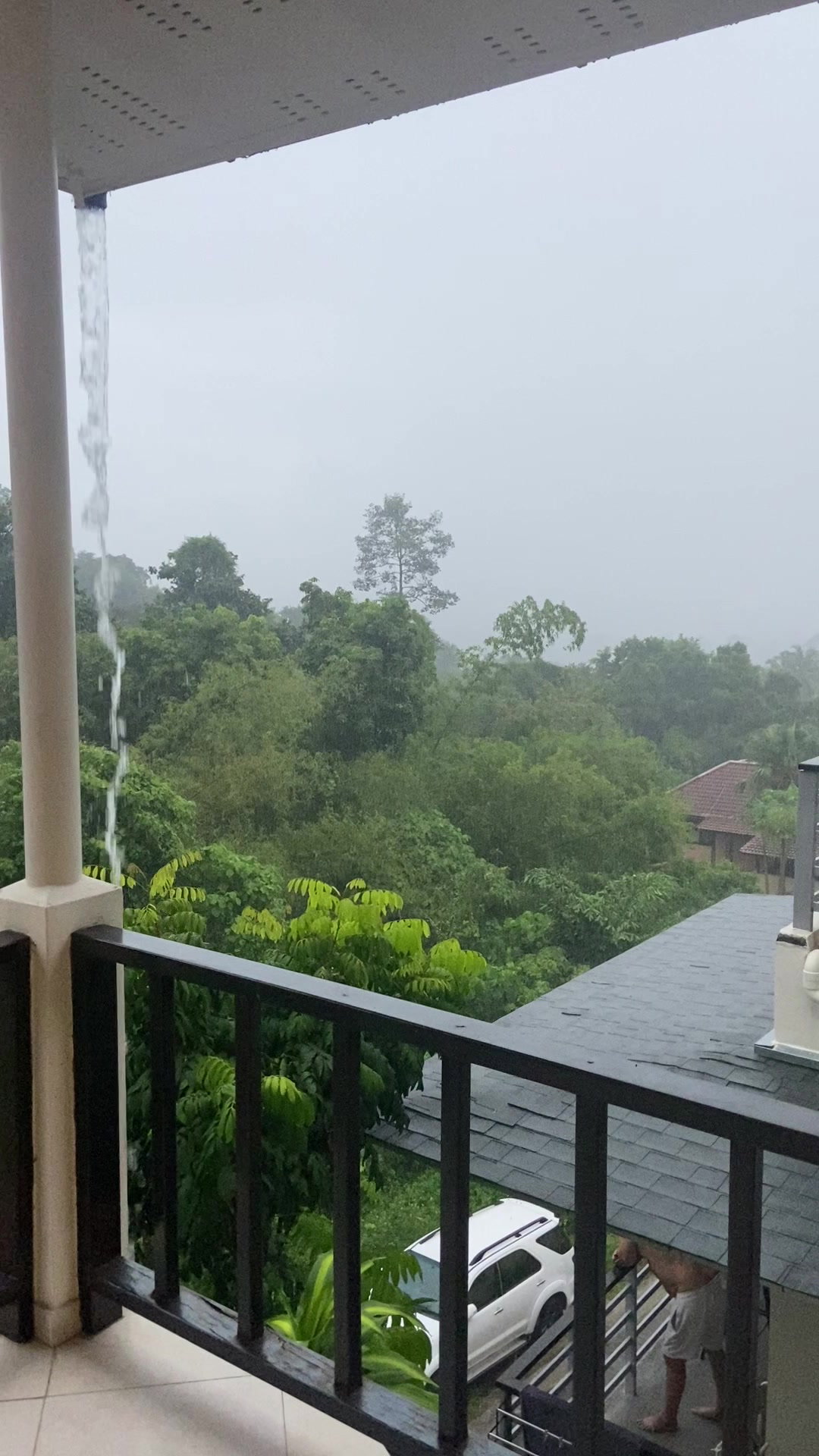
Photo: Heavy rain over the hills at Peerke's Place, Koh Samui
There is one detail worth knowing if you have traveled elsewhere in Thailand: Samui sits on the Gulf coast, and its rainy season runs on the opposite schedule from the Andaman coast (Phuket, Krabi, Khao Lak). While those regions are drying out from October, Samui is heading into its wettest months. This also means the reverse is true in the middle of the year: Samui's June to September green season is calmer than the same months on the west coast.
Our villa, whatever the season
Peerke's Place sits in the hills of Bophut, with a private infinity pool and a covered terrace with a sea view. On a sunny day, that terrace is where you will want breakfast. On a rainy one, it is a dry spot to watch the weather roll in over the water, with the pool still there for the gaps between showers. The hillside location also means good drainage and no flooding, which can be a concern in some of the island's lower-lying areas during the wettest months.
Frequently asked questions (FAQ)
What is the overall best month to visit Koh Samui? For the most reliable weather, late December through February. For lower prices and fewer crowds, consider July, August, or early September.
Is October or November a bad time to visit? Not necessarily. It is the rainiest period, so showers do happen, and on an unlucky day they can last for hours. If your travel dates are fixed to these months, it is still a workable trip. Pack for rain and keep your plans flexible.
When is the sea calmest for diving and snorkeling? Visibility and conditions are generally best from March to September, with the hot season (March to May) offering some of the clearest water.
Is Koh Samui's rainy season the same as the rest of Thailand's? No. Samui is on the Gulf coast, so its wettest months (October to December, peaking in November) fall opposite the rainy season on Thailand's Andaman coast.
Plan your stay
The weather is the one thing nobody, including us, can control. Whichever season you choose, check the availability calendar for your dates or send us a message with any questions. We are happy to help you plan around it.
www.peerkesplace.com
info@peerkesplace.com

Back to the blog